


BLANCHING AND DRYING
Some vegetables need to be blanched before being dried. This means they are dropped into boiling water for a certain amount of time.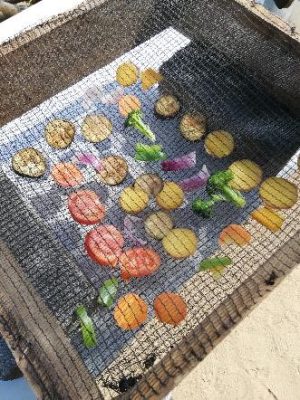
Drying requires a warm temperature, low humidity and a flow of air. Drying is a slow process and can take from 6 hours to 5 days. Drying time is influenced by the moisture content of the vegetable or fruit as well as the method of drying used.
Always use fresh healthy produce to ensure a good quality dried product.
Methods of Drying
Sun Drying:
Produce is placed on drying racks, covered with netting to prevent contamination from insects and dust, and placed in direct sun or shade.
Drying time: 3-5 days
The Drying Process
Cleaning
- Use only good quality, ripe produce
- Clean all working surfaces, containers, and equipment. Use a solution of 1 part bleach to 50 parts water (20L water + 400ml bleach).Use fresh cleaning solution every day.
- Do not break the skin of the produce during this process!!
- Place produce in a clean container after washing.
- Stops ripening
- Prevents change in flavour
- Enables produce to rehydrate better
Peeling
- Peeling should not take place in the space where raw produce is washed.
- Peel carefully to remove as little flesh as possible.
- Dispose of peels immediately.
Cutting and slicing
- The type of produce determines the thickness of the slice.
- Thick slices take longer to dry.
- Thin slices stick to drying trays.
- If you intend to sell, make sure all slices are the same thickness.
Blanching (necessary for vegetables and recommended for fruits as well)
- Boil just enough water to cover the produce.
- Place cut produce in a steamer basket.
- Immerse in boiling water (required time varies).
- Remove from boiling water and drain with a sieve.
Keeping the colour
- Now place vegetables into a bath of warm water into which the juice of one lemon has been squeezed
- Allow to cool for about 10 minutes, before removing the vegetables and draining them.
- This will ensure that vegetables do not lose their colour or become discoloured during drying.
Loading the tray
- Drying trays must be brushed clean and washed beforehand.
- Load trays while slicing — produce muse be placed close, but not overlap.
- Trays should be placed on a level area out of the wind either directly in the sun or in the shade.
Drying
- If possible, place the tray/dryer inside overnight to protect from dew.
Packaging and Storage
Proper packaging and storage prevents moisture from re-entering. Pack carefully to avoid bruising. Packaging needs to be done immediately after totally dry.
- Store in airtight glass jars, boxes, or metal cans with tight fitting lids or sealed in plastic bags.
- Store in small quantities to avoid major losses due to mould.
- Store only one type of food in each container.
- Store in a cool, dry, and clean area.
- It is best to store the glass containers should be kept in a dark environment.
Right: Bottles with dried sweet potato, ground chillies and brinjal.
Containers must be marked with the date. They can be stored for 1-2 years. A high quality product will be properly dried with no mould. It should have a good colour, but some browning is normal. It should taste like the fresh produce. Dried vegetables must be dry and brittle.
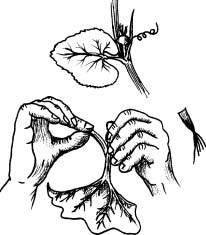
How to dry pumpkin leaves: How to dry carrots:
Select fresh, tender leaves Choose crisp, tender carrots without woodiness
Peel off the hairy outer skin Steam until cooked through but not mushy
Wash in clean water Remove whiskers, tails and crowns
Steam blanch for 3 to 5 min Cut into rings (2-3 mm) or shred
Place on trays ready for drying Arrange on trays for drying
Test for dryness: crumble easily Test for dryness: slices very tough, but can be bent.
